

This month a noteworthy Hermann Sons anniversary quietly passed by without fanfare. While San Antonio was immersed in OctoberFest revelry, it was easy to overlook the 100th anniversary of its local precursor, the Hermann Sons Carnival, a grand annual fete with a 54-year life span.
Gates opened for the first Hermann Sons Carnival on October 6, 1923. The public was welcomed. The first three-day event involved months of planning, advertising, arranging of entertainment, and hard surfacing of the entire garden in order to accommodate nightly outdoor dances. (In those days the area from the building to the river was unpaved and known as The Garden.) The San Antonio Light advertisement billed the event as the “Monster Hermann Sons Carnival” with expectations of 5000 or more visitors each night. Cash and prizes for attendance were handed out, including a 1923 Ford sedan valued at $700. Amusements included an “old German inn” and “girls in dresses harmonizing with the decorations of the booth [serving] good things to eat and drink.” It’s worth noting that this was three years into the Prohibition era. Are we to suppose that no beer was served at these outdoor festivities hosted by Germanfolk in October? Beer or not, the first carnival was a great success.
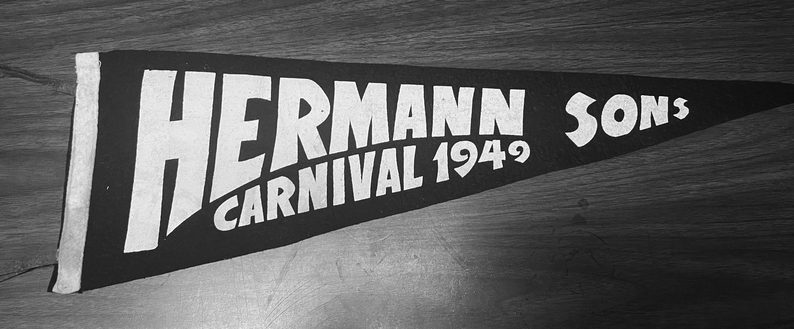
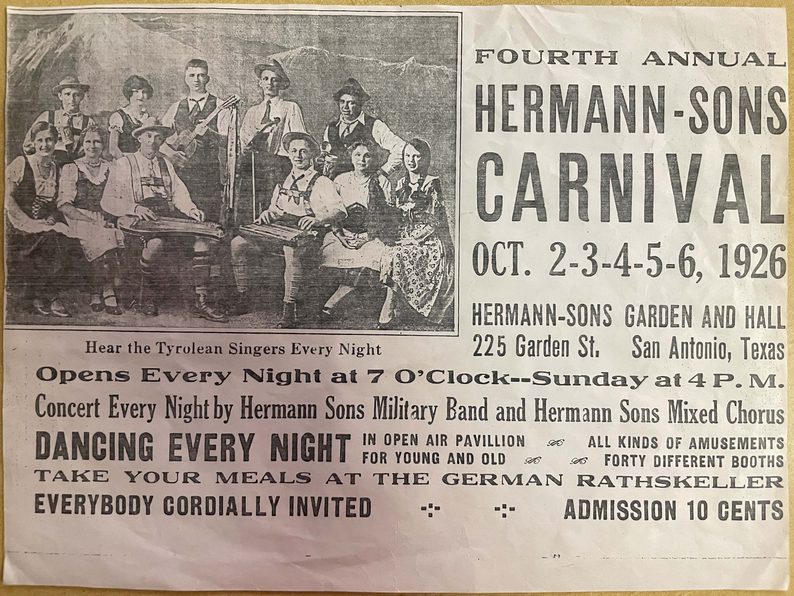
Before long the carnivals grew to five days, attracted tens of thousands of guests each year, and never failed to offer traditional German food, nightly dances with bands and orchestras, and rides for kids. Throughout the years entertainment included a range of spectacles, from dance troops and military bands to parades, even barn dances, variety acts, talent shows, teen record hops, spook houses, and an authentic Mexican village. In the 1940s a pre-carnival dance was added to the lineup. This Hermann Sons massive multi-day affair continued to grow by the year in popularity and attendance. From the beginning admission was 10 cents and remained so until 1958 when the price doubled for non-members.
For a few years in the late 1950s a Carnival Queen was crowned, an honor bestowed upon the young woman who sold the most pre-carnival dance tickets. She was crowned at an elegant coronation ceremony in the Rooftop Garden during the pre-carnival dance. The pre-carnival dance tradition continued until the end, many years after the last queen was coronated.
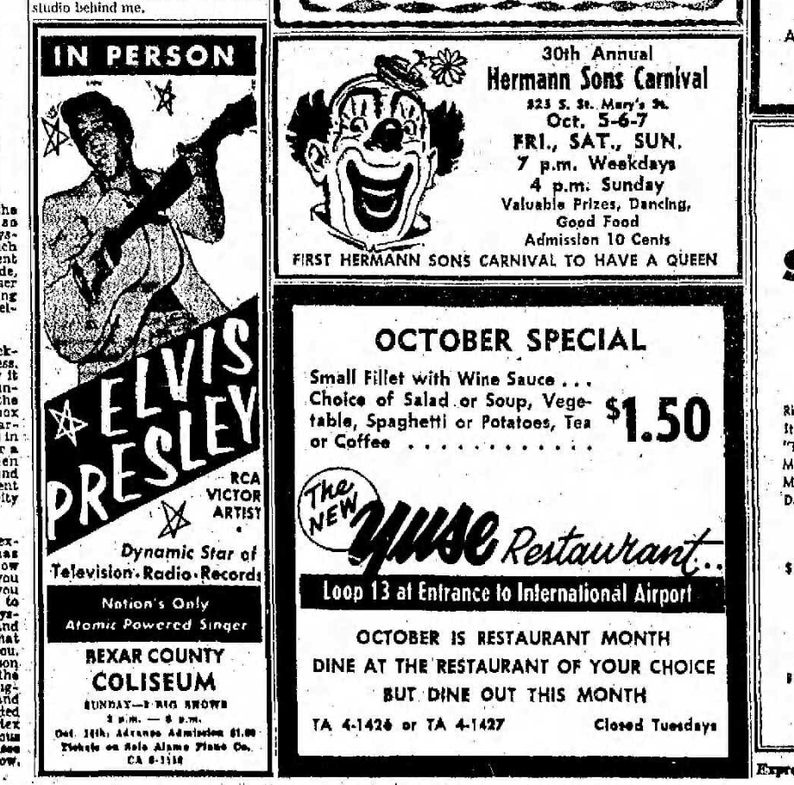
The 54 years of carnivals coincided with many momentous historical events and certainly nodded to the news of the time. Events were scaled back and even ceased for a few years during the Great Depression. During the war years, carnival proceeds were donated to lodge members serving in the armed forces and their families. Service men and women were given free admission. The 1945 carnival was named the “Victory Carnival.” The 1946 ad for the 21st event proclaimed “Carnival Grows Up” reminding us that both the voting and legal drinking age were 21 at the time. The 1956 newspaper ad butted up against the ad for Elvis Presley In Person at the Bexar County Coliseum.
Efforts waned in the years following HemisFair ‘68. The carnival was eventually shortened to two days and open only to members, their families, and “bona fide guests.” In 1976 the carnival acknowledged its Golden Anniversary, and in 1977 finally shut the gates for good after the 51st event.
If you find yourself craving a brat in October, you may thank our city’s early-twentieth-century German community for this tradition of celebrating their heritage locally this month, and ushering in San Antonio’s OctoberFests to come.
by Jennifer Stanford | posted October 26, 2023
All rights reserved.
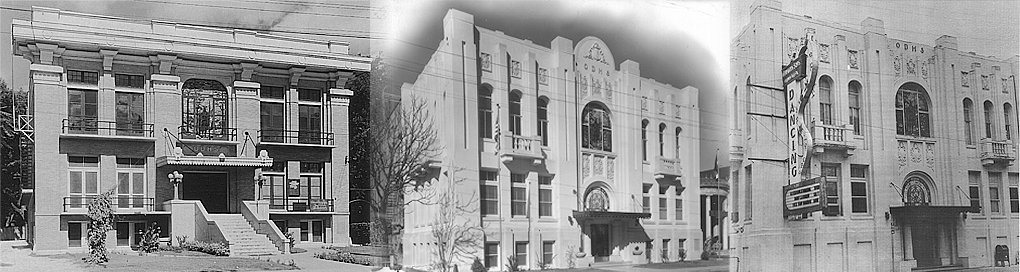
 Hermann Sons Hall
Leave a comment