

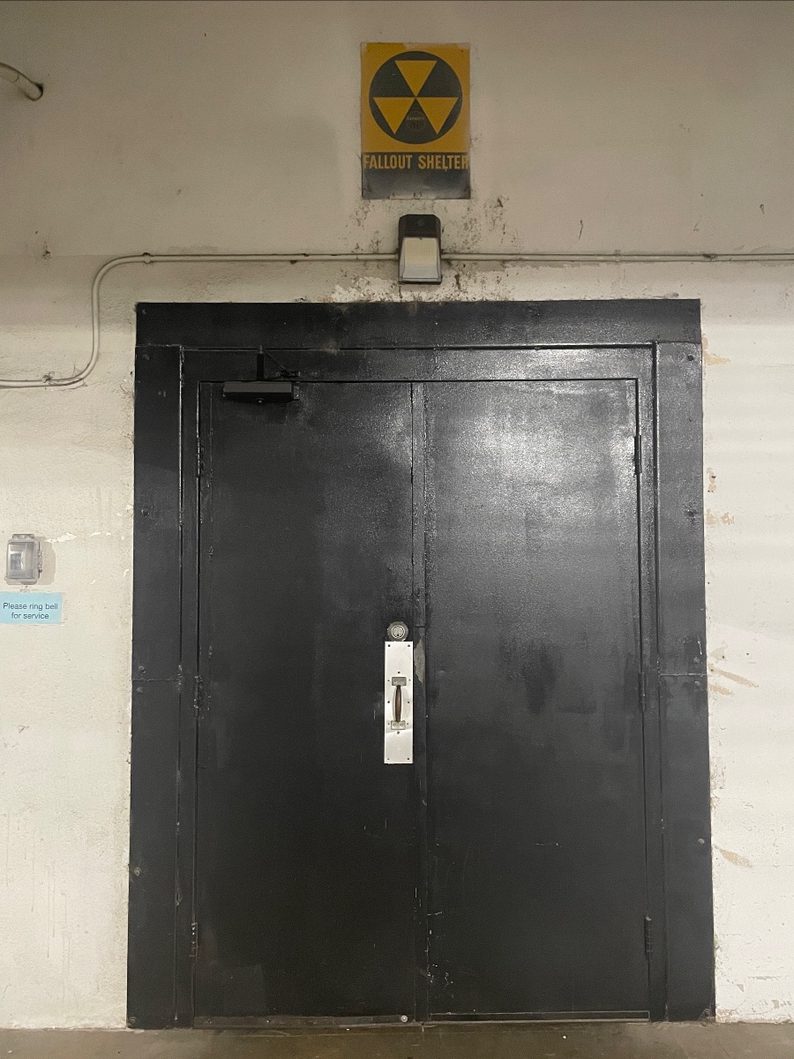
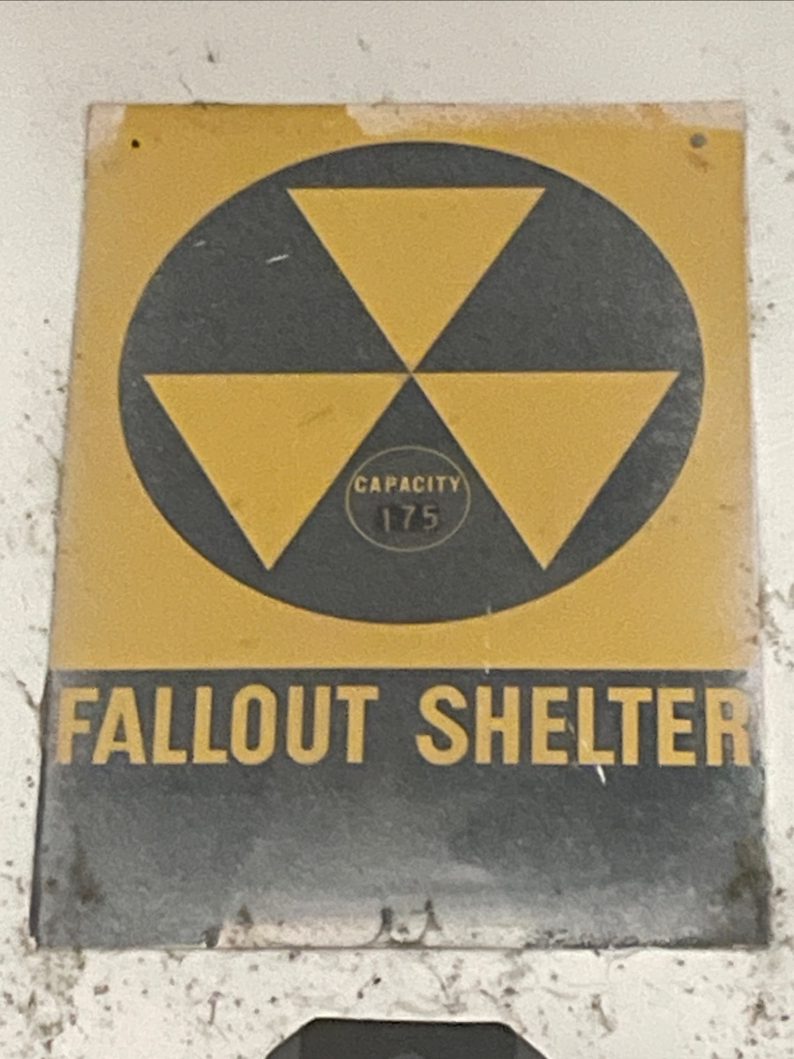
Back when duck-and-cover drills were a routine school day activity and the specter of nuclear war was on everyone’s mind, the Rathskeller Bar offered more than cold beers in a gemütlich basement. The iconic black and yellow sign above our back door reminds us that the basement of the Home Association building was once designated as a fallout shelter.
Fallout shelter signs were part of a national safety program announced by President John F. Kennedy in July 1961. The Army Corps of Engineers was charged with surveying public buildings across the country to determine their suitability for protection against radioactive fallout by meeting three criteria: (1) underground protection and airtightness, with thick concrete walls, providing a minimum protection factor of 40 (meaning no more than 1/40th of outside radiation could penetrate the building); (2) sufficient distance from likely fallout (because surviving a direct strike was quite unlikely); and (3) room for at least 50 people with 10 square feet of space per person. The selected buildings were typically schools, hospitals, post offices, and churches. In San Antonio they included malls and buildings on military installations. The Hermann Sons Home Association basement also passed muster.
In 1963 it was estimated by the Civil Defense office that approximately 170 public safe spaces throughout downtown San Antonio could shelter 110,000 people, about ⅙ of the population.
Public fallout shelters were identified by standardized exterior and interior signage. The exterior signs were 20 by 14 inches, visible from 200 feet away, and stamped with the shelter’s capacity. Indoor signs were smaller, directing people to the safest spot within the building. Both had to be posted out of a vandal’s reach, per government orders. According to our exterior sign, the Hermann Sons Home Association building could shelter 175 souls.
As fears of a nuclear attack subsided, interest in the shelters waned over the decade and the federal funding for the program dried up by the early 1970s. Many signs disappeared and spaces were repurposed. Remaining signs serve as an eerie reminder of a frightening time.
Today you can still find recommendations for surviving a nuclear attack on our city’s website and the Rathskeller Bar might come to mind. Next time you’re at the Rathskeller Bar, raise a glass to world peace and let’s hope it never comes to that.

by Jennifer Stanford | posted October 5, 2023
All rights reserved.
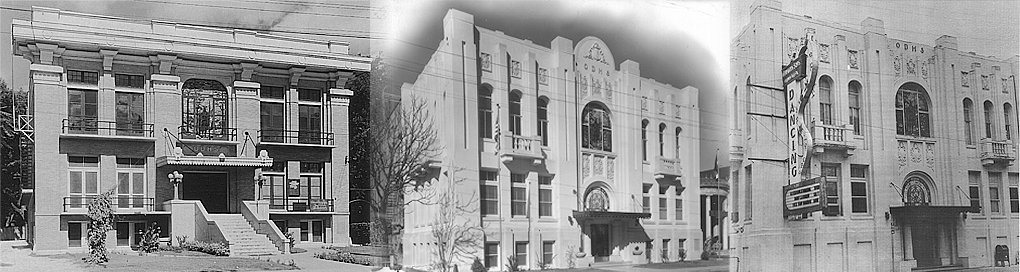
 Hermann Sons Hall
Leave a comment